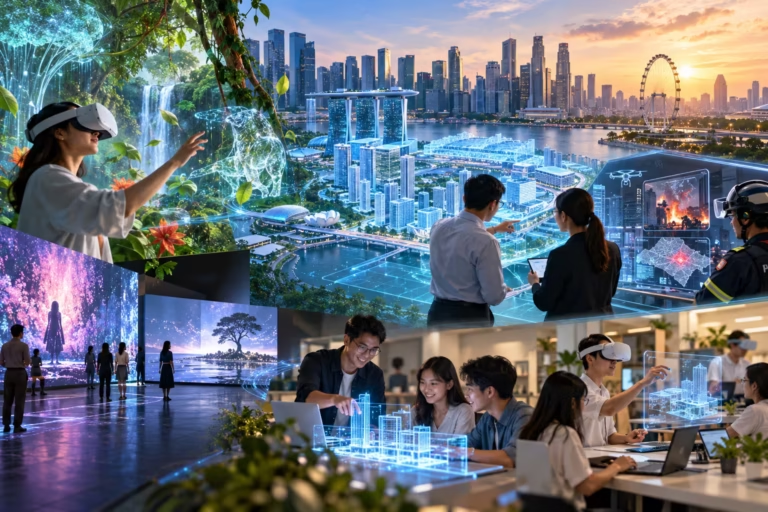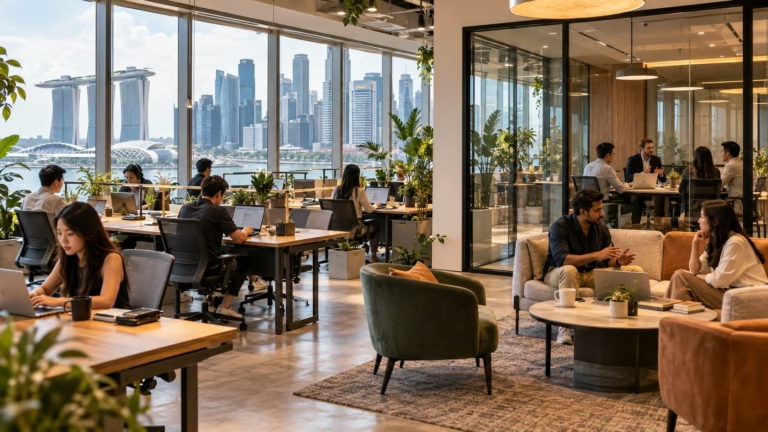

Start-ups in Singapore are increasingly becoming problem-solvers for society. Rather than focusing only on consumer convenience or business efficiency, many founders are using technology to respond to challenges that affect everyday life. Singapore’s strong digital infrastructure, stable business environment, and regional position in Southeast Asia make it an ideal place for start-ups to test solutions before expanding to larger markets. The result is a growing wave of companies that combine innovation with social purpose.
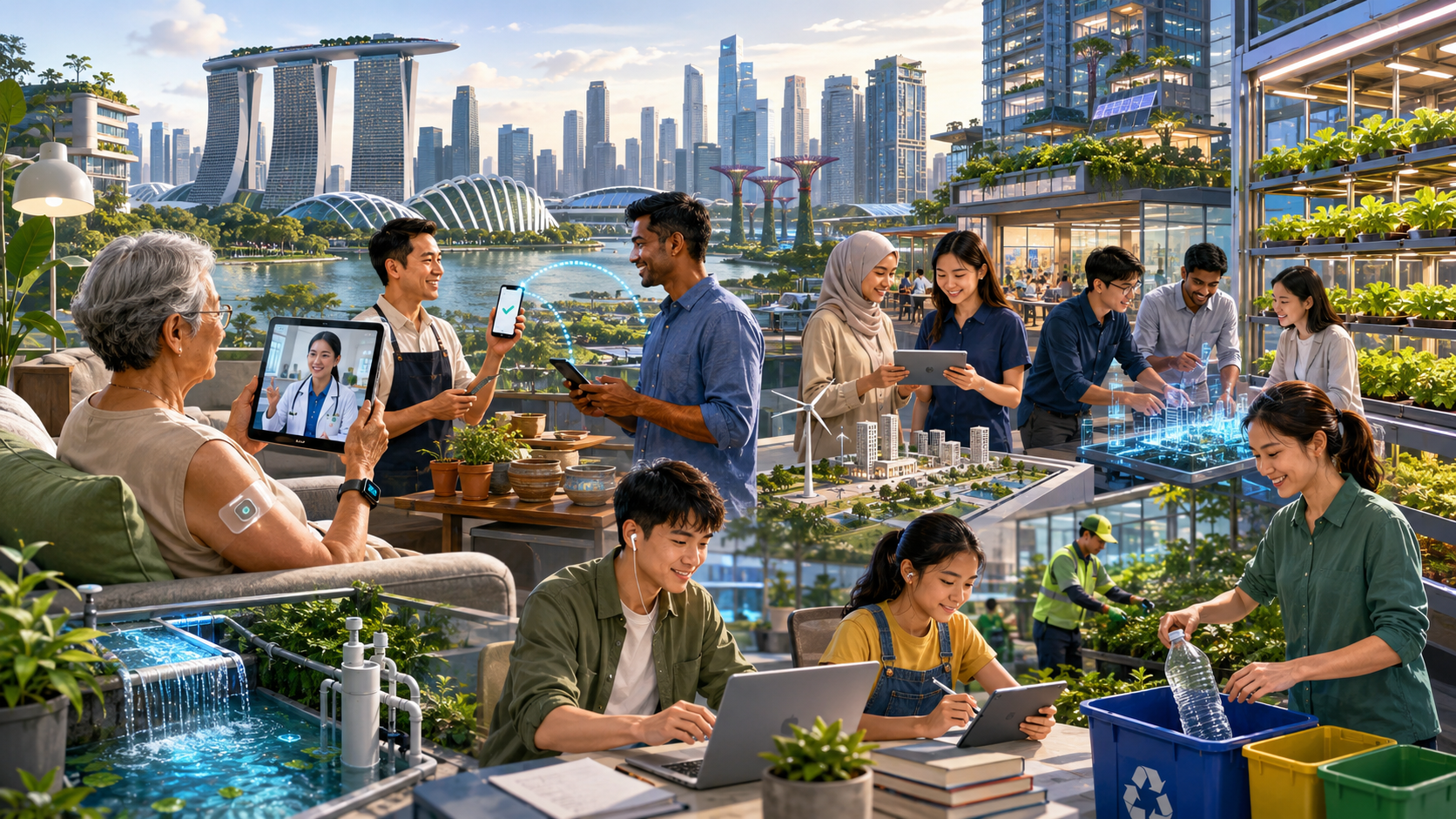
A key trend can be seen in healthcare and eldercare. Singapore’s society is ageing, and this creates greater demand for medical services, caregiving support, and long-term wellness solutions. Start-ups are developing digital health platforms that connect patients with doctors, provide remote consultations, and help monitor chronic conditions. Some solutions use artificial intelligence to support early detection of health risks, while others use sensors or wearable devices to track movement, sleep, heart rate, or medication routines. These tools can reduce unnecessary clinic visits and help families care for elderly relatives more effectively.
Another important area is financial inclusion. Although Singapore is a global financial hub, not everyone benefits equally from traditional banking systems. Migrant workers, freelancers, micro-business owners, and people with irregular incomes may face difficulties accessing affordable financial products. Fintech start-ups are addressing this gap through mobile payment apps, lower-cost remittance services, digital lending platforms, and budgeting tools. For migrant workers, faster and cheaper remittances can have a direct impact on families overseas. For small businesses, digital finance tools can improve cash-flow visibility and reduce dependence on informal borrowing.
Education technology is also transforming the way people learn and upgrade their skills. In a knowledge-based economy, lifelong learning is essential. Singaporean edtech start-ups are creating platforms for online lessons, professional training, language learning, coding education, and career reskilling. Some platforms personalize content based on a learner’s progress, making education more flexible and efficient. Others focus on underserved learners, including students who need additional academic support or adults trying to transition into new industries. This helps reduce inequality by giving more people access to practical learning resources.
Sustainability is another field where start-ups are making a visible contribution. Singapore has limited natural resources and faces pressure to build a greener, more resilient urban environment. Start-ups are working on food security through urban farming, alternative proteins, and supply-chain optimization. Others focus on reducing food waste by using data to forecast demand or redirect surplus food. Smart building technologies, energy-monitoring systems, and water-efficiency tools are also helping companies and households lower their environmental impact.
The strength of Singapore’s innovation ecosystem comes from collaboration. Start-ups often work with government agencies, research institutes, corporations, and universities. This allows them to test products in real-life settings and improve them with expert feedback. At the same time, social innovation is not easy. Companies must balance growth with affordability, protect user data, and make sure their solutions serve people who truly need them.
Singapore’s start-up scene shows that technology can be more than a commercial tool. When designed responsibly, it can help communities become healthier, better educated, financially stronger, and more sustainable. The most successful start-ups will be those that understand social problems deeply before building digital answers.