


The Numbers Tell a Stark Story
Singapore’s AI adoption landscape in 2026 is defined by a persistent divide. According to the Ministry of Manpower, 27.2% of smaller firms with fewer than 200 employees have adopted AI, compared to 54.8% of mid-sized firms and 76.4% of larger firms with more than 500 employees. Meanwhile, 86% of workers report using AI in their jobs—a figure that suggests the tools are present but the organisational integration lags.
This is not a story of SME resistance to technology. It is a story of structural disadvantage meeting targeted intervention.
Why the Gap Exists
Capacity Constraints
Larger firms possess dedicated IT teams, data infrastructure, and the financial cushion to experiment. SMEs often operate with lean teams where the owner wears multiple hats, leaving no bandwidth for technology evaluation and implementation.
The Pilot-to-Production Chasm
The UOB poll revealed that 30% of respondents identified the inability to move beyond pilot stages as a core challenge. While 55% of SMEs explore or pilot AI solutions, only 6% actively use AI across their businesses. The tools are accessible; the pathways to operational integration are not obvious.
Data Readiness Deficits
Many SMEs lack the structured, centralised data that AI systems require to function effectively. The UOB Business Outlook Study identified gaps in data and system readiness as a primary hurdle, alongside funding constraints and talent limitations.
The Government’s Multi-Pronged Response
National AI Impact Programme
Singapore’s National AI Impact Programme aims to support 10,000 enterprises in advancing AI adoption and transformation over three years, while training 100,000 workers to become “AI bilingual”—fluent in both their industry and AI tools.
Tech Bridge: A Bridge Over the Gap
The Beyondsoft Tech Bridge Programme, announced in October 2026, directly addresses the adoption gap by connecting 1,000 SMEs with curated, market-proven AI solutions from global innovation hubs. Critically, the programme provides 60-day complimentary trials, eliminating the financial risk of testing solutions that may not fit.
Awards as Aspiration
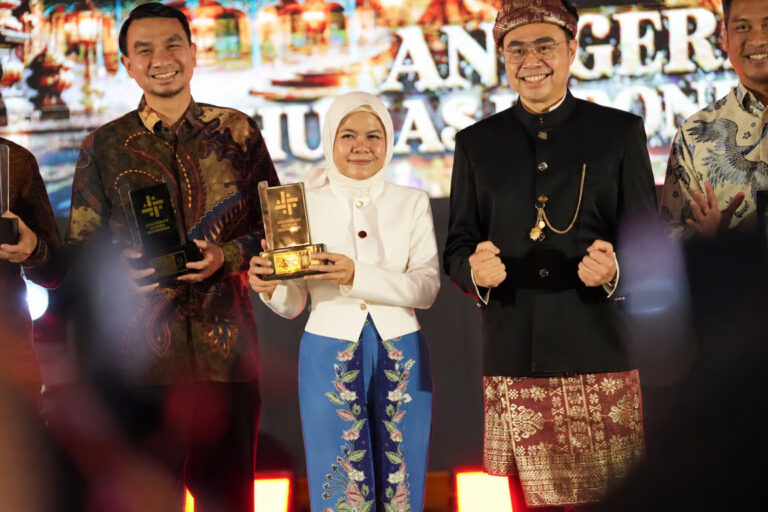
The inaugural SME AI Impact Awards recognised 30 SMEs across 21 sectors for achieving meaningful AI outcomes, with 15 receiving awards for deploying proprietary AI solutions and 15 for successfully implementing off-the-shelf tools. The awards serve a dual purpose: celebrating achievement and providing visible proof that SMEs of all sizes can succeed with AI.
What Closing the Gap Requires
The difference between a 27% adoption rate and a 76% adoption rate is not talent or ambition—it is access. Access to capital through grants and loans. Access to proven solutions through programmes like Tech Bridge. Access to skills through training initiatives that pair ITE students with small enterprises to co-develop AI solutions.
The 400% Deduction as Equaliser
The Enterprise Innovation Scheme’s expansion to include AI expenditures as a qualifying activity—with 400% tax deductions on up to S$50,000 annually for 2027 and 2028—provides a structural financial advantage that benefits smaller firms disproportionately, since the deduction represents a larger percentage of their overall tax burden.
The gap remains, but the tools to close it are now in place. The SMEs that act in 2026 will define the competitive landscape for the decade ahead.