A Talent Gap That Could Undermine Everything
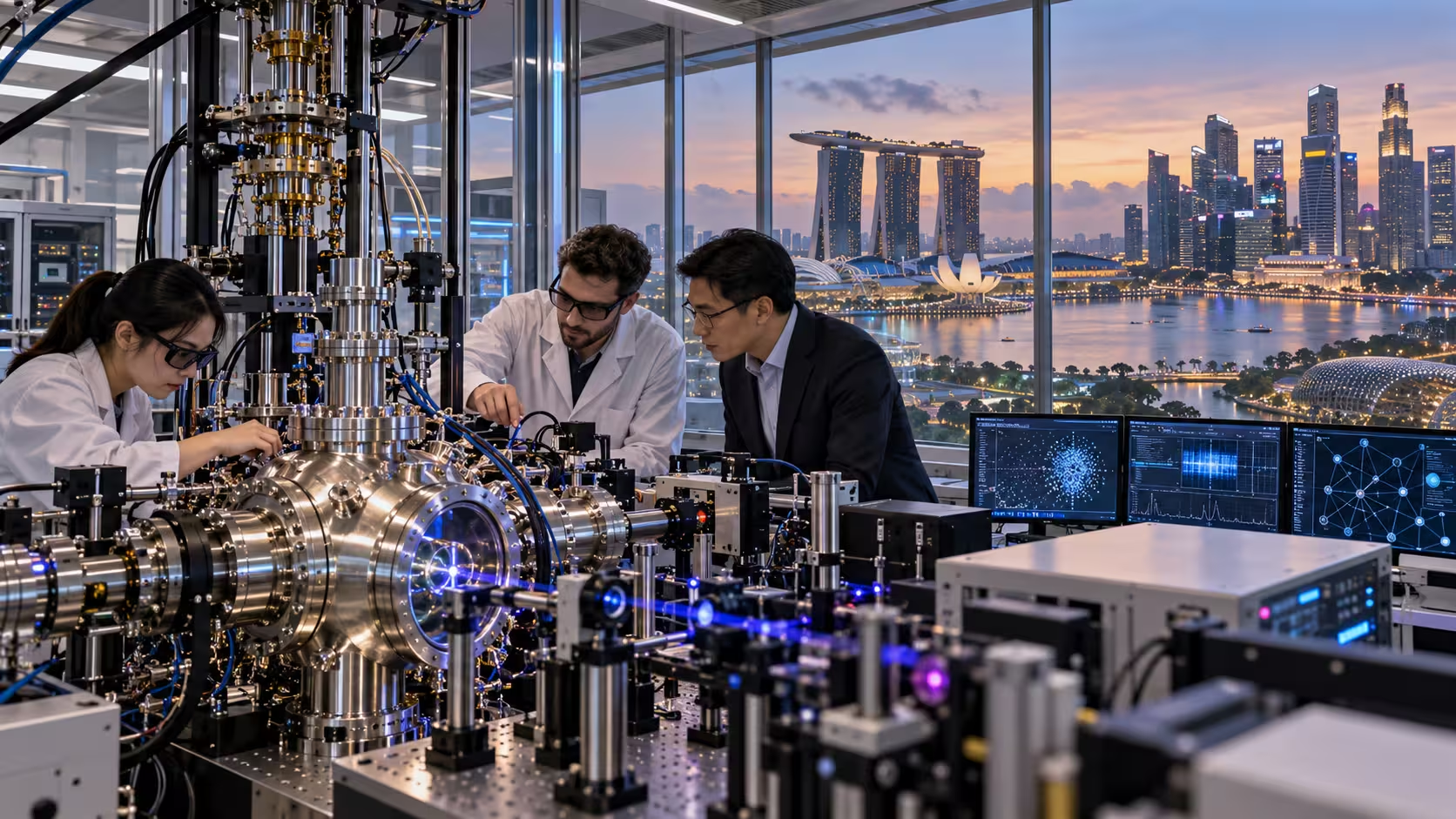
Singapore’s quantum computing ambitions depend on a resource it cannot manufacture in a fab: skilled human capital. The city-state faces a global quantum talent shortage compounded by its own demographic headwinds. Singapore’s total fertility rate dropped to a historic low of 0.87, while its population is ageing rapidly. Competition from AI and other technology sectors further fragments the available talent pool.
A 2026 analysis from the S. Rajaratnam School of International Studies (RSIS) warned that Singapore “may need to assess whether its current approach to acquire, develop and retain such talent is sufficient,” noting challenges including demographic constraints, a reliance on international students, competition from other sectors, and the mix of qualifications required for quantum roles.
Quantinuum-SIT: Training for the Helios Era
The most concrete talent initiative emerged in August 2026, when Quantinuum signed a Memorandum of Understanding with the Singapore Institute of Technology (SIT) to train and expand Singapore’s quantum workforce. The collaboration prepares an industry-ready workforce across engineering, systems development, and applied technologies.
Key initiatives include joint development of hands-on training modules for both undergraduates and working professionals, direct access to Quantinuum’s quantum software and development tools, and regular workshops and campus events to build technical literacy in quantum computing. This addresses a growing commercial demand for skilled talent, ensuring local developers and engineers gain direct exposure to state-of-the-art quantum hardware.
The National Quantum Scholarship Scheme
At the national level, the National Quantum Strategy includes a scholarship scheme aiming to sponsor 100 master’s and 100 doctoral students over five years to meet growing industry and research needs. However, critics note that this approach is “entirely dependent on a scholarship scheme for PhD and master’s students only” — potentially missing mid-career professionals and engineers who could transition from adjacent fields.
The IBM-SIT Quantum-Safe Connection
The talent challenge extends beyond quantum computing into quantum-safe cybersecurity. In August 2026, SIT and IBM announced plans to establish a Quantum-Safe Centre at SIT’s Punggol Campus by the end of 2026. Beyond providing a testing ground for quantum-related cybersecurity risks, the partnership addresses the skills gap in post-quantum cryptography through two Continuing Education and Training programs covering post-quantum cryptography, enterprise migration planning, cryptographic risk discovery, governance, and security architecture modernization.
Retention: The Hidden Challenge
Acquiring talent is only half the equation. Singapore’s higher cost of living has weighed on long-term retention of international talent in recent years. As regional quantum ecosystems in Japan, South Korea, and Australia grow, Singapore cannot assume its attractiveness will persist. The city-state’s ability to offer competitive research funding, industry collaboration opportunities, and clear career pathways will determine whether it retains the quantum specialists it trains.