

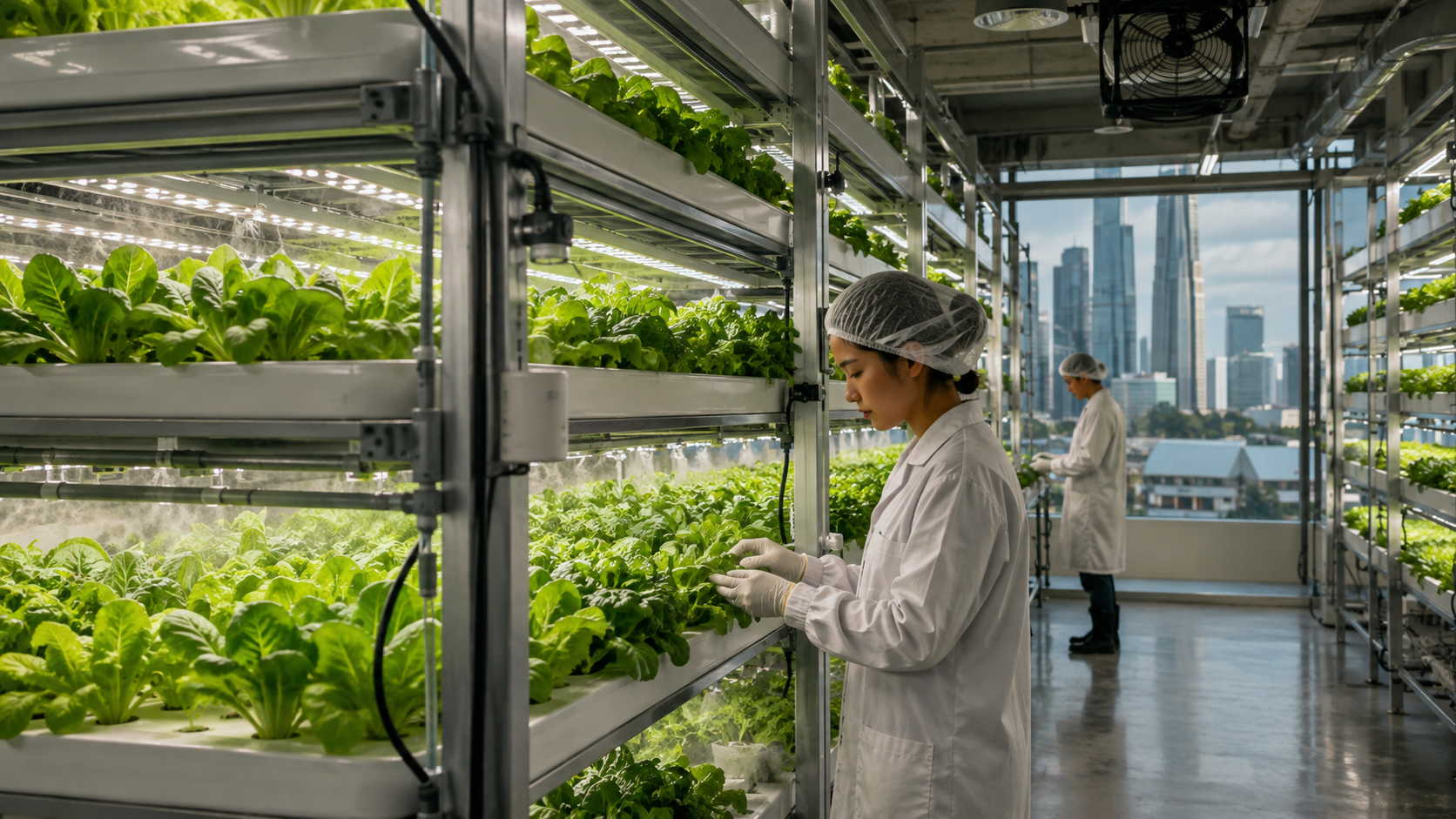
Singapore is one of the most densely populated countries in the world, yet it has found room for farms in surprising places: rooftops, underused industrial sites, school compounds, and even office lobbies. The Singapore Food Agency’s urban farming initiatives page (https://www.sfa.gov.sg/, accessed 2026) outlines how the government encourages commercial and community farming in urban spaces. This hyperlocal approach reduces food miles, shortens supply chains, and builds public awareness of food security. A wave of agritech startups is now pushing the concept further with automation, IoT monitoring, and modular farm designs.
Rethinking Land Scarcity in a Dense Metropolis
Policy Incentives for Unconventional Spaces
The government has introduced grants and regulatory support to convert rooftops, car parks, and vacant state land into productive farms. These sites do not compete with housing or commercial development, making them politically and economically attractive. Startups can lease such spaces at lower cost and test new farming methods without heavy land acquisition. This policy shift has created a niche for hyperlocal food production that complements large-scale vertical farms.
Startup Models for Hyperlocal Production
Several Singapore startups are building businesses around small, distributed farms. Grobrix designs modular indoor farms that can be installed in offices, hotels, and community centers, allowing people to harvest fresh greens on-site. Urban Farming Partners develops rooftop farms that combine hydroponics with community training programs. Farm85 and others focus on compact hydroponic systems for restaurants and schools. These models differ from centralized vertical farms by embedding food production directly into daily life. They also create new revenue streams for building owners and reduce the carbon footprint of transporting vegetables from rural farms to urban consumers.
IoT and the Rise of Data-Driven Community Gardens
Hyperlocal farms increasingly rely on IoT sensors, mobile apps, and cloud-based dashboards. Growers can monitor pH, nutrient levels, and light exposure from a smartphone. Automated irrigation systems reduce manual labor and water waste. Some startups offer subscription models where residents receive fresh produce weekly from a nearby rooftop farm, with the harvest schedule optimized by predictive analytics. This blend of community engagement and digital agriculture makes food security tangible and participatory.
Social and Nutritional Impact
Beyond production volume, hyperlocal farms deliver social benefits. They create green spaces, improve air quality, and offer educational programs for schools. Residents gain a better understanding of where food comes from and how technology can make urban agriculture viable. Nutritionally, freshly harvested greens retain more vitamins than produce that has traveled for days. In a city that imports more than 90 percent of its food, these small-scale farms may not replace imports entirely, but they build a more resilient and food-literate population.