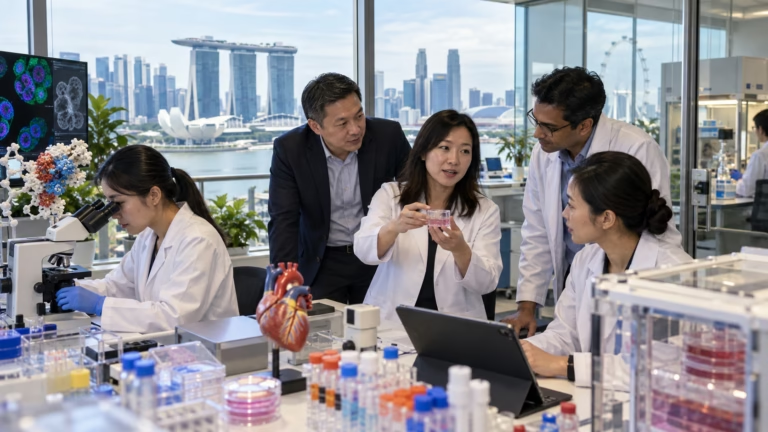



Singapore’s Healthcare Companies Embrace the Digital Transformation Era
The healthcare industry in Singapore is undergoing rapid transformation as companies increasingly adopt digital technologies to improve healthcare accessibility, efficiency, and patient outcomes.
Medical technology companies are becoming essential partners in modern healthcare development. Their innovations include AI-powered diagnostic systems, remote monitoring tools, electronic health solutions, and advanced medical devices.
Singapore’s healthcare transformation is not only focused on hospitals but also on creating connected healthcare networks where patients can receive continuous medical support.
Medical Technology Companies Driving Healthcare Innovation
Development of Smart Medical Devices
Singapore-based medical technology companies are developing devices that help doctors monitor patients more effectively. Wearable healthcare devices, remote monitoring systems, and digital diagnostic tools are becoming increasingly important.
These technologies allow healthcare professionals to collect real-time health information and detect potential problems before conditions become severe.
For chronic disease management, such as diabetes and heart disease, digital monitoring provides patients with better control over their health.
Artificial Intelligence Improving Medical Efficiency
AI has become a major driver of healthcare innovation in Singapore. Companies are developing AI solutions that assist with medical imaging, hospital management, and predictive healthcare analysis.
AI tools can analyze large datasets quickly, helping doctors identify risks and make informed decisions. This reduces pressure on healthcare professionals while improving service quality.
Smart Hospitals Become the Next Healthcare Model
Singapore has invested heavily in creating technology-enabled healthcare facilities. Smart hospitals integrate automation, robotics, and digital information systems to improve patient care.
These hospitals use technology to streamline operations, manage resources, and enhance communication between healthcare providers.
The Ministry of Health Singapore continues promoting healthcare transformation through digital initiatives, with information available at: https://www.moh.gov.sg/
Real-World Context: Aging Population and Healthcare Demand
One of the biggest challenges facing Singapore is its rapidly aging population. This demographic change increases demand for healthcare services and requires more efficient medical solutions.
Healthcare technology companies are responding by creating solutions that allow elderly patients to receive care outside traditional hospitals.
Remote healthcare monitoring, telemedicine platforms, and home-based medical services are becoming increasingly valuable.
Opportunities for Healthcare Technology Businesses
Singapore’s healthcare technology sector offers significant opportunities for startups and established companies. The combination of government support, advanced infrastructure, and strong healthcare standards creates an ideal environment for innovation.
Future developments are expected in robotics-assisted healthcare, AI diagnostics, and personalized digital health platforms.
Singapore demonstrates that healthcare innovation is no longer limited to medical professionals but increasingly depends on technology companies capable of solving complex healthcare challenges.