
Singapore as a Regional Sustainability Laboratory
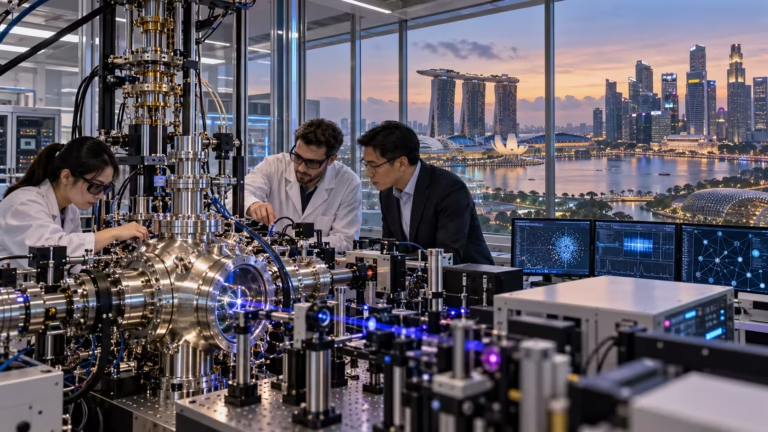
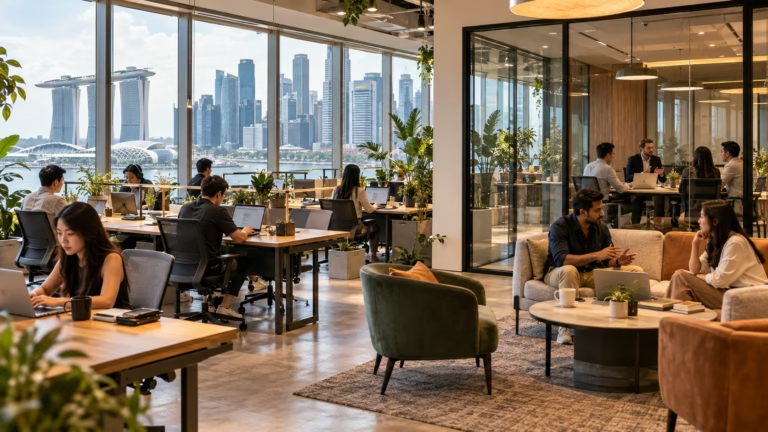
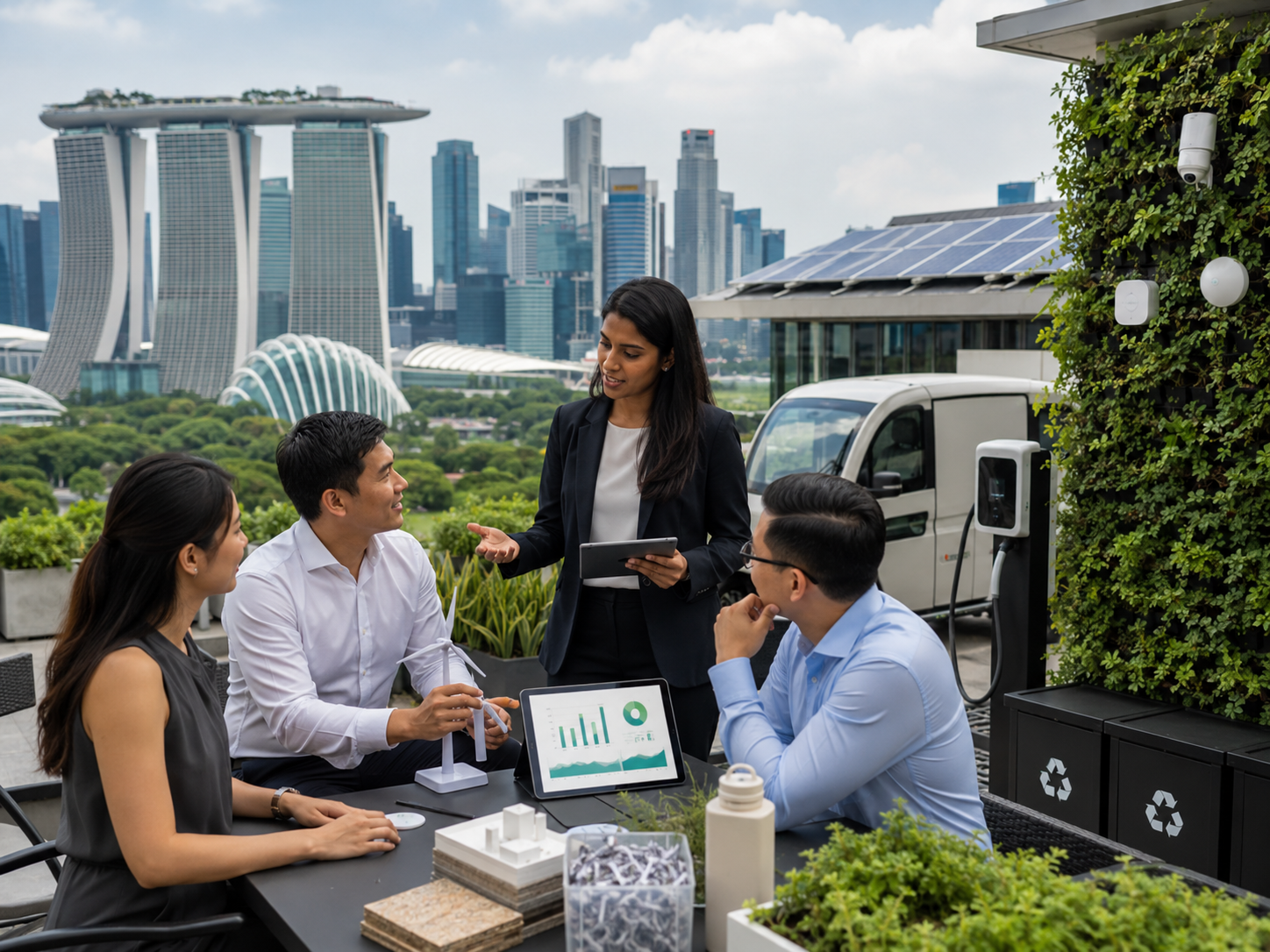
Singapore may be geographically small, but its sustainability influence is larger than its borders suggest. The country is home to regional headquarters, major investors, research institutions, logistics hubs, and a strong digital economy. This mix makes it an ideal place for start-ups building low-carbon technologies that can later expand across Asia.
The real opportunity is not simply to create green companies for Singapore alone. It is to develop solutions for dense, fast-growing Asian cities facing heat, waste, energy demand, and infrastructure pressure. Singapore provides a disciplined testing ground where technologies can be refined before entering more complex regional markets.
Enterprise Singapore has supported innovation through programmes that connect companies with sustainability challenges and technology providers. Its official website, https://www.enterprisesg.gov.sg/, is a useful reference for understanding how Singapore encourages business growth, innovation, and internationalisation. This support helps young firms move from prototype to commercial deployment.
Energy Efficiency Is the First Frontier
Cooling, Buildings, and Operational Savings
In tropical cities, cooling is one of the most urgent sustainability issues. Singapore’s office towers, shopping centres, hotels, hospitals, and industrial spaces rely heavily on air-conditioning. Start-ups targeting energy efficiency can make an immediate difference by using sensors, analytics, and automation to reduce unnecessary consumption.
These technologies are attractive because they do not require companies to completely redesign their buildings. Instead, they optimise existing systems. A facility manager can identify equipment faults, adjust cooling schedules, and respond to occupancy changes. Over time, the building becomes cheaper to run and less carbon-intensive.
Green Finance Needs Reliable Technology
Singapore’s position as a financial centre creates another major opportunity: sustainable finance. Banks, asset managers, insurers, and listed companies need credible environmental data to assess risk and meet disclosure expectations. Start-ups that provide ESG verification, carbon accounting, climate-risk analytics, and supply-chain transparency are becoming part of the financial infrastructure.
This matters because capital allocation depends on trust. Investors cannot confidently support low-carbon projects if they cannot verify performance. Technology start-ups help reduce this information gap by turning fragmented data into structured insights.
Circular Economy Innovation Fits Singapore’s Constraints
Singapore’s resource limitations also make circular economy start-ups highly relevant. Waste reduction is not just an environmental preference; it is a practical national concern. Start-ups are building systems for food-waste tracking, materials recovery, recycling analytics, and reusable packaging.
In the construction sector, for instance, digital tools can help developers identify reusable materials before demolition or renovation. In food retail, demand forecasting can prevent overproduction. In logistics, reusable packaging models can cut both waste and replacement costs.
Real Case Context: Regional Cities Need Exportable Solutions
The most compelling angle is regional scalability. Southeast Asia’s cities are urbanising quickly, and many face the same problems Singapore is trying to solve: inefficient buildings, growing electricity demand, waste pressure, and limited sustainability data. Singapore-based start-ups can use the city-state as a proof-of-concept market before expanding outward.
A carbon accounting platform tested with Singapore suppliers can later serve regional manufacturers. A smart-cooling system proven in local hotels can be adapted for resorts and offices across Asia. A circular packaging model refined in Singapore’s dense delivery market can support e-commerce players elsewhere.
The Strategic Value of Start-ups
Large companies and governments can set targets, but start-ups often create the tools that make those targets achievable. Singapore’s sustainability start-ups matter because they work at the practical layer: sensors, software, analytics, materials, and platforms. Their impact grows when they turn environmental responsibility into measurable business value.