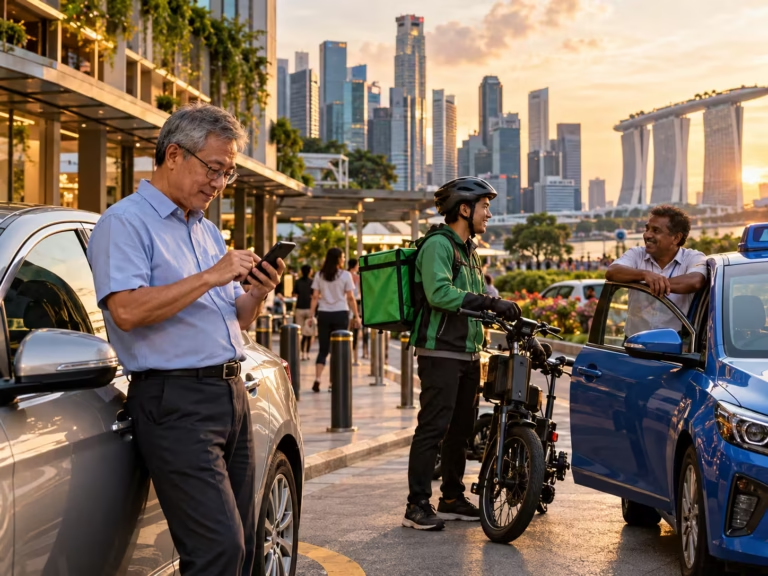

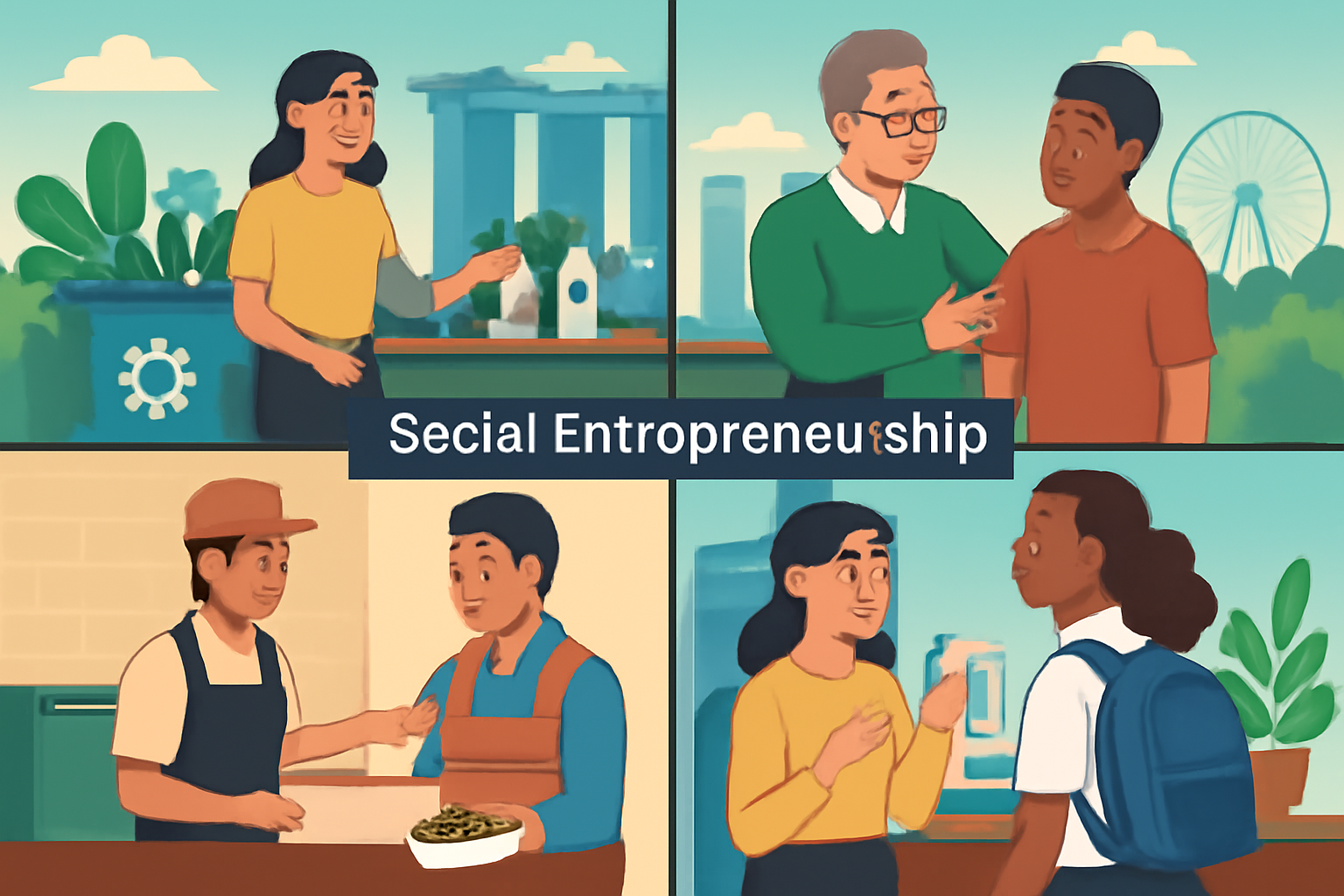
Social entrepreneurship in Singapore has seen a remarkable rise in recent years, with businesses leveraging innovative solutions to solve complex societal issues. Social entrepreneurs in this region have managed to blend profit-making with social impact, creating business models that not only address social challenges but also foster economic growth. This unique approach to business has helped shape Singapore as a leader in social entrepreneurship in Asia.
The Singapore government has played an instrumental role in nurturing social entrepreneurship. Through initiatives like the Singapore Economic Development Board’s (EDB) Social Enterprise Scheme, the government has provided funding and mentorship to social enterprises, helping them scale and expand their reach. These government-backed programs have created an environment where social enterprises can thrive, offering access to resources, capital, and expertise that can help entrepreneurs develop their social business models.
Singapore’s strong commitment to creating a sustainable future is another driver behind the rise of social enterprises. The city-state has established itself as a global leader in sustainability and innovation, attracting a growing number of social entrepreneurs who focus on environmental issues. Enterprises like Refash, which promotes sustainable fashion by reselling second-hand clothing, and Eco-Business, a media platform promoting sustainable practices, are just two examples of how businesses can contribute to a greener world while also remaining economically viable.
Beyond environmental concerns, social enterprises in Singapore are tackling issues such as poverty, education, and disability. The Purple Parade is an excellent example of an initiative that raises awareness about the challenges faced by persons with disabilities. The event has successfully created a platform for dialogue, encouraging society to reconsider its perception of disability and providing opportunities for businesses to hire and integrate people with disabilities into the workforce.
Another notable social enterprise is Food from the Heart, which aims to alleviate hunger by distributing food to low-income families. This enterprise runs a food bank that collects surplus food from donors and redistributes it to those in need, working to address food insecurity in Singapore’s underserved communities.
The business model of social enterprises in Singapore is designed to be self-sustaining. Many social enterprises here adopt a hybrid model, where profits from business operations fund social initiatives. For instance, My Paper Bag sells eco-friendly, reusable bags made from recycled materials. Profits generated from bag sales are directed towards providing vocational training and employment opportunities for disadvantaged groups.
The success of social enterprises in Singapore lies in their ability to align business objectives with social goals. This dual focus on profit and impact has not only led to successful business ventures but has also instilled a sense of corporate responsibility among entrepreneurs. Investors are increasingly interested in businesses that create tangible social or environmental outcomes, which has further fueled the growth of the sector.
In Singapore, the fusion of social impact and entrepreneurial spirit has resulted in a dynamic social enterprise ecosystem. Social entrepreneurs in the region continue to demonstrate that doing good and doing business are not mutually exclusive, but can coexist to drive change and create a better future for all.