
From Factory Floor to Innovation Engine
For two decades, Singapore’s biomedical sciences strategy was built on manufacturing. The country attracted global pharmaceutical companies by offering reliable infrastructure, skilled labour, intellectual property protection, and strategic access to Asian markets. That strategy worked: Singapore today hosts regional headquarters for eight of the world’s top ten pharmaceutical companies and houses over 60 bio-based manufacturing plants. In 2025, the Economic Development Board attracted S$4.4 billion in biomedical sciences investments, creating 1,775 jobs over the next five years.
But manufacturing alone is not sufficient. The most valuable parts of the pharmaceutical value chain—discovery, development, and intellectual property ownership—remain concentrated in a handful of global hubs. Singapore’s challenge, and its opportunity, is to move up that value chain without abandoning its manufacturing strengths.
The Evolving Role of Global Partners
The expansion of global companies’ activities in Singapore suggests this transition is already underway. Merck expanded its biosafety testing laboratory in Singapore in August 2026, adding the first BioReliance® Cell Line Characterization and GMP Next-Generation Sequencing capabilities in Asia Pacific. Bristol Myers Squibb strengthened its 60-year legacy in Singapore and announced plans for five new clinical trials in the country by the end of 2026, reinforcing Singapore’s role in improving access to innovative medicines across the region.
These expansions are not merely about adding capacity—they are about adding capability. Merck’s investment in advanced biosafety testing positions Singapore as a regional centre for quality control and regulatory science, functions that support both manufacturing and clinical development. BMS’ clinical trial expansion means that therapies developed globally will be tested in Asian patient populations, generating data that supports regulatory approvals across the region.
Building the Startup Layer
Singapore’s biomanufacturing strength has also created a foundation for a startup ecosystem. A*STAR BTI spinoff AuctuCel launched an AI platform designed to reduce cell medicine production costs by 80%, addressing one of the key barriers to commercialising cell and gene therapies. Esco Aster, Singapore’s first commercial cGMP manufacturer, signed a clinical manufacturing contract with Shine-On Biomedical in January 2026. These companies occupy the space between research and large-scale production—translating laboratory discoveries into clinical-grade products.
The growing presence of venture capital focused on life sciences manufacturing strengthens this layer. Sante Accel Singapore, launched in June 2026, will support healthcare startups with capital, mentorship, and global networks, with plans to invest several million dollars and help establish at least four startups over three years.
The Competitive Edge
What distinguishes Singapore from other biomanufacturing hubs? Several factors. First, regulatory alignment: Singapore’s Health Sciences Authority is recognised for its rigour and efficiency, providing a predictable pathway for companies seeking regional approvals. Second, intellectual property protection: companies operating in Singapore have confidence that their innovations will be safeguarded. Third, neutrality: Singapore’s position as a trusted node between East and West allows it to serve as a neutral ground for collaboration across geopolitical divides.
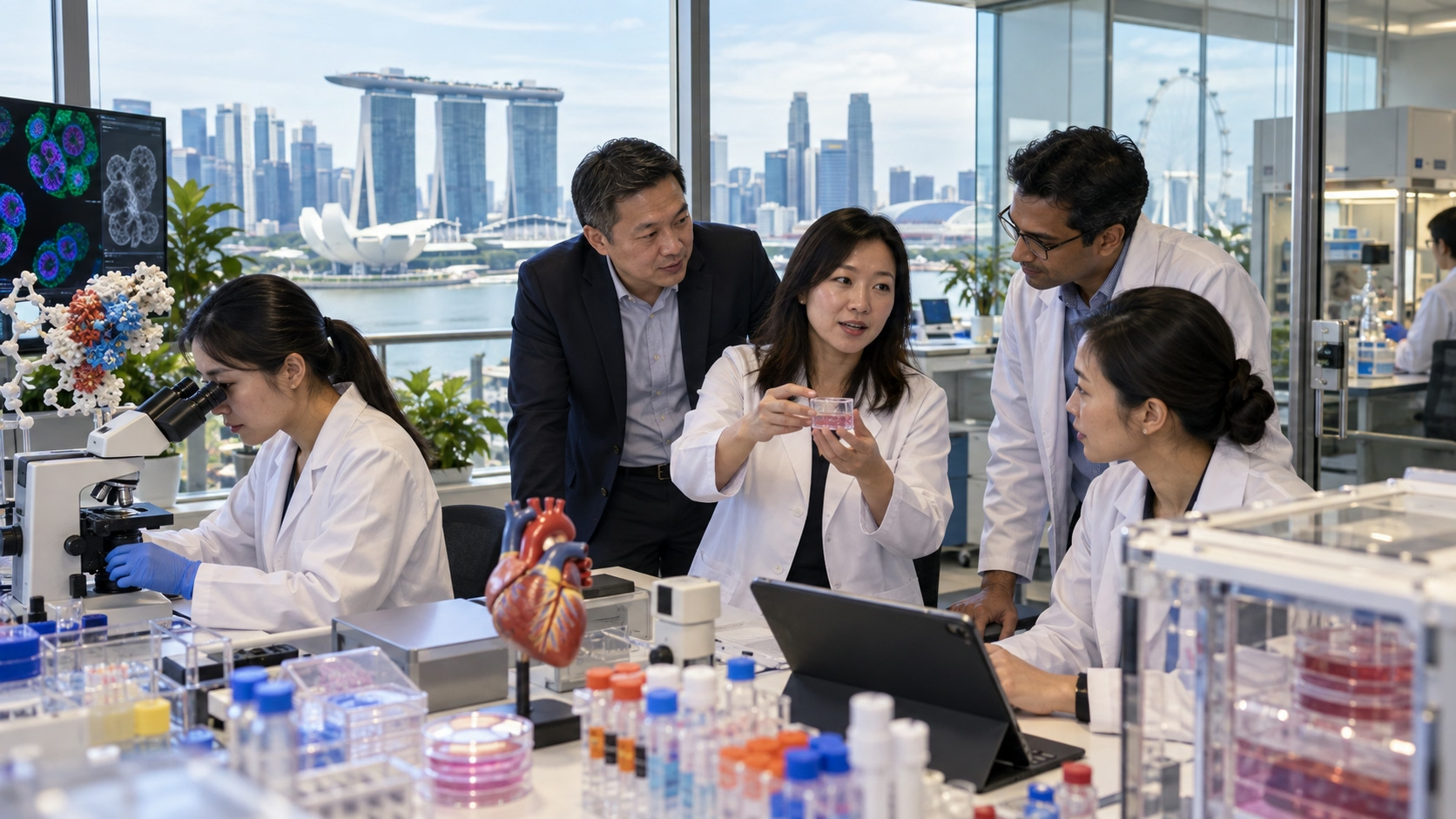
Fourth—and perhaps most importantly—Singapore has invested in the human capital required for a knowledge-intensive industry. The concentration of research institutes, universities, and commercial operations in the one-north and Tuas districts creates a talent ecosystem where scientists can move between academic research, startup ventures, and industry roles.
The Next Phase
Singapore’s biomanufacturing sector is not standing still. The shift toward personalised medicines, cell and gene therapies, and RNA-based products requires different manufacturing approaches than traditional small-molecule or monoclonal antibody production. These new modalities are more complex, more expensive, and more patient-specific. Singapore’s investments in bioprocessing research, automation, and analytical technologies are designed to position it at the forefront of these manufacturing transitions.