
Polybee: The “Physical AI Agents” Revolutionizing Pollination
Singapore’s agritech innovation extends beyond controlled environments into the open field, thanks to companies like Polybee. This startup is deploying tiny, self-recharging drones equipped with cameras to serve as “physical AI agents” . These drones perform two critical functions: they monitor crop quality and health to provide AI-powered yield forecasts, and they perform autonomous pollination in greenhouses for crops like tomatoes and strawberries .
Polybee’s technology has demonstrated tangible results, including up to 15% higher yields in greenhouse crops and a 3x profit improvement for growers by optimizing harvest timing . By eliminating reliance on manual pollination methods and providing actionable intelligence, Polybee is making farming more precise, efficient, and profitable.
The Data-Driven Farm: Sensors and Analytics
The digital transformation of Singaporean agriculture is also evident in the widespread adoption of sensor technology and data analytics. As seen in fish farms like SAT, a comprehensive network of sensors continuously monitors environmental and biological parameters, feeding data into cloud-based systems for real-time analysis and automated responses . This shift from experience-based farming to data-driven decision-making is fundamental to increasing productivity and reducing risk.
On land, vegetable growers are using similar technologies. Automated irrigation systems and climate-controlled environments, supported by government funding, are enabling year-round production of high-quality produce . These systems reduce manual labor, optimize resource use, and create more stable growing conditions, directly contributing to the consistency and reliability of the local food supply.
AI as the Central Nervous System of Modern Farming
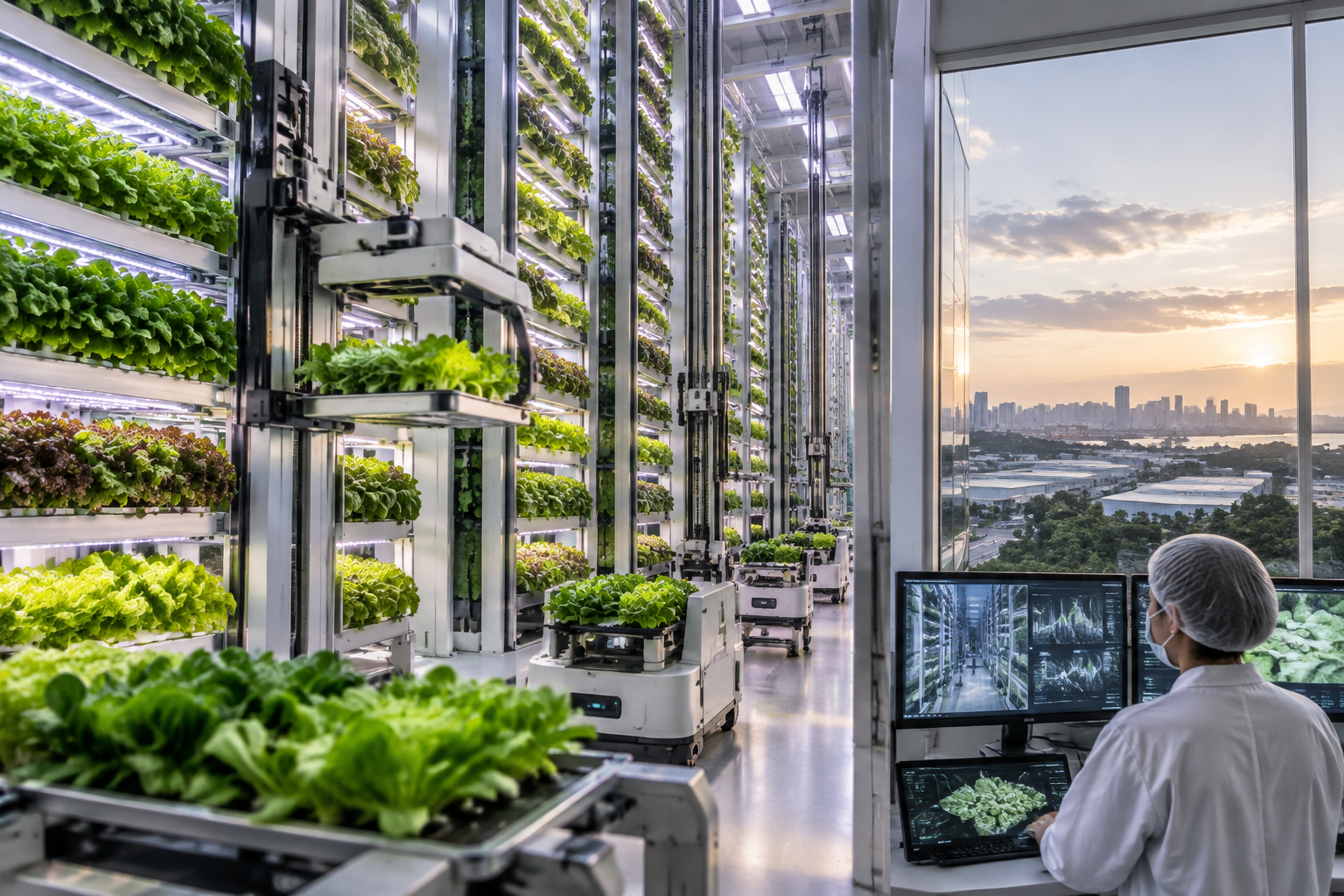
At the heart of this digital revolution is artificial intelligence. In the world’s tallest vertical farm, Greenphyto, AI software manages everything from adjusting nutrients and lighting to predicting yields and detecting plant stress . Similarly, in aquaculture, the new Feed and Feed Ingredient Technology Centre (F2TC) will leverage AI-driven models to study fish feeding behavior and develop more efficient aquafeeds .
This integration of AI across the agricultural value chain—from seed to harvest, from feed to fish—is creating a “central nervous system” for food production. It allows farmers to operate with unprecedented precision, responsiveness, and foresight. For Singapore, this technological edge is not a luxury but a necessity, enabling a small nation to maximize its limited resources and build a truly resilient food system for the future.