
Singapore Tourism Is Powered by Coordination
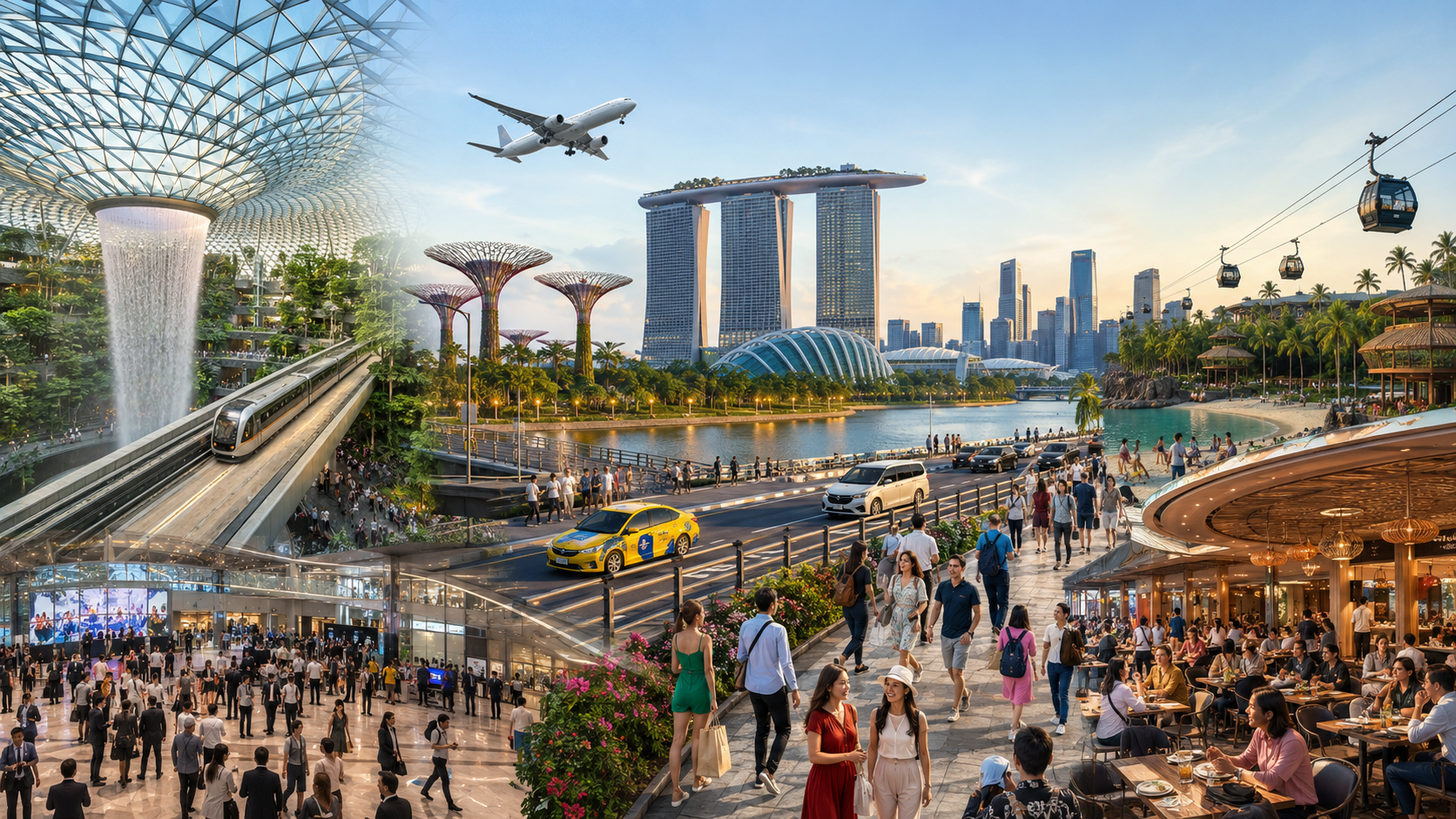
Singapore’s tourism industry in 2026 is not only about famous landmarks. Its strength comes from coordination among companies that manage aviation, hotels, attractions, transport, payments, retail, and business events. This structure allows Singapore to offer a visitor experience that feels organized, safe, premium, and efficient.
The Singapore Tourism Board’s official statistics and market insights platform, available at https://www.stb.gov.sg/, is an important source for businesses monitoring arrivals, tourism receipts, and market trends. These indicators help companies adjust pricing, capacity, marketing, and investment strategies.
Changi Airport and Singapore Airlines Set the Standard
The Arrival Experience Matters
For many travelers, Changi Airport is the first contact with Singapore. Changi Airport Group has made that moment commercially valuable by combining airport operations with retail, dining, design, and lifestyle experiences. Jewel Changi Airport is a strong example of how an airport can become part of the tourism journey rather than just a transit point.
Singapore Airlines supports this positioning through international connectivity and premium service. The airline strengthens Singapore’s appeal among business travelers, long-haul tourists, and high-spending visitors. In a competitive Asian travel market, this combination of airport quality and airline reputation gives Singapore a clear advantage.
Hospitality Companies Drive Visitor Spending
From Luxury Resorts to Business Hotels
Hotels are among the most important companies in the tourism value chain because they influence how long visitors stay and how much they spend. Marina Bay Sands and Resorts World Sentosa are especially significant because they combine accommodation with entertainment, conventions, dining, retail, and attractions.
Other hotel operators, including Accor, Hilton, Marriott, IHG, and regional groups such as Pan Pacific Hotels Group, help serve multiple visitor profiles. Singapore needs this variety because its tourism strategy targets families, corporate travelers, luxury tourists, event delegates, and regional weekend visitors.
Attractions Keep Singapore Competitive
Urban Entertainment With Green Positioning
Singapore’s attraction operators play a major role in creating reasons to visit beyond business and shopping. Gardens by the Bay, Mandai Wildlife Group, Sentosa Development Corporation, the National Gallery Singapore, and Marina Bay precinct businesses help build a full itinerary for travelers.
A timely example is the rising importance of experiential tourism. Visitors increasingly want destinations that offer nature, culture, design, dining, and digital-friendly spaces. Singapore has responded by developing attractions that are easy to access, visually distinctive, and suitable for families, solo travelers, and content-driven tourists.
Mobility and Digital Services Remove Friction
Transport companies such as SMRT, SBS Transit, ComfortDelGro, and Grab make Singapore easier to explore. Their role is central because tourists often judge a destination by how quickly and safely they can move around.
Digital service providers also support the tourism economy. Mobile payments, online booking platforms, restaurant reservation tools, and travel apps help visitors plan and spend with less friction. In 2026, convenience is a key part of tourism competitiveness, and Singapore’s private-sector technology layer supports that advantage.
MICE Creates Demand Beyond Leisure Travel
Singapore’s business events sector is a major contributor to tourism resilience. Sands Expo and Convention Centre, Suntec Singapore, and Singapore EXPO attract trade shows, corporate meetings, industry summits, and international exhibitions.
The impact extends beyond the event halls. Delegates book hotel rooms, use transport services, dine at restaurants, visit attractions, and often return later for leisure travel. This is why MICE companies are central to Singapore’s tourism ecosystem in 2026. They help turn the city into a year-round destination where business travel and leisure spending support each other.